The back of the card

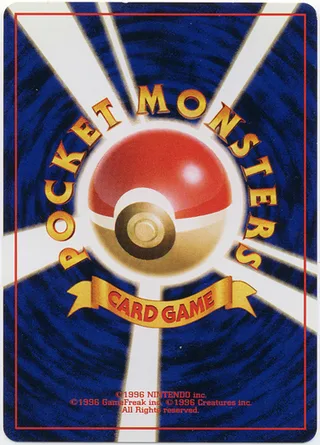
Card back images © Pokémon / Nintendo / Creatures / GAME FREAK, via Bulbapedia, shown for identification only.
What to check, labelled
Five checks from behind
- Border width. The blue border on the back should look even all the way round. If one side is much thinner, the card was cut off-centre. That is genuine, but graders mark it down: back centring is scored separately from front centring.
- The blue. Genuine backs vary a little between print runs and printers, so a slightly lighter or darker blue on its own is not proof of a fake. Compare with a card from the same set. A purple tint, flat colour or a washed-out look is a warning sign.
- Print sharpness. The Poke Ball, its black band and the logo should have clean, crisp edges. Blurry outlines or fuzzy dots usually mean a copy of a copy.
- Edges and corners. White specks along the blue edges ("whitening") are wear, not a fault in the print. It is the first thing that drops a grade.
- Which way up. The English back has the logo at the top and upside down at the bottom, so it looks almost the same both ways up. The easiest tell is the Poke Ball in the middle: on a normal card, with the front the right way up, the red half of the ball is at the top. If the red half is at the bottom, the back is printed upside down. That is either a rare back error (below) or a fake.
Back errors that really exist
Inverted back errors are genuine misprints where the back was printed upside down compared with the front. They are tiny in number: PSA has graded 64 of them across the vintage English sets (October 2026), including a single Base Set Charizard.
| Set | Inverted backs graded by PSA |
|---|---|
| base1 | 31 |
| base2 | 17 |
| base4 | 9 |
| base3 | 4 |
| neo2 | 2 |
| ecard1 | 1 |
PSA also lists two different back finishes, "glossy" and "matte", for a couple of Expedition cards (Pichu and Hoppip). Other back faults, such as ink smudges, roller marks or a miscut that shows the edge of the next card, appear on genuine cards too. Errors are only special when a grading company recognises them. A random mark is usually just damage.
Go deeper: the Japanese back is different
Early Japanese cards (1996 to mid-2001) carry the old "Pocket Monsters" back. From Pokemon VS (July 2001), Japanese cards switched to the Pokemon-logo back, which looks very like the English one. So an English card with the old "Pocket Monsters" back is never genuine. Sources disagree slightly on the exact date the Japanese back changed (between mid-2001 and 2002).
Go deeper: two simple tests sellers sometimes ask about
The light test: shine a phone torch through the card. Genuine cards let through only a little, soft light because of a dark inner layer. Many fakes glow brightly. Compare with a cheap genuine common, because some genuine cards pass more light than others.
The rip test: tearing a card shows the dark layer inside, but it destroys the card. Only ever do it on a card that is already worthless to you.
Card images © Pokémon / Nintendo / Creatures / GAME FREAK, shown small for identification and education only, via the open TCGdex and pokemontcg.io card databases. Not for sale or reuse. To request removal, email hello@pocketmoonstars.com and we will take it down the same day.